COPAL - COPAIBA BALSAM
“Copaiba was demonstrated to be twice as effective as diclofenac sodium, an NSAID (non-steroidal anti-inflammatory) which is the most commonly used anti-inflammatory in the world.” (Masson et al, 2013)

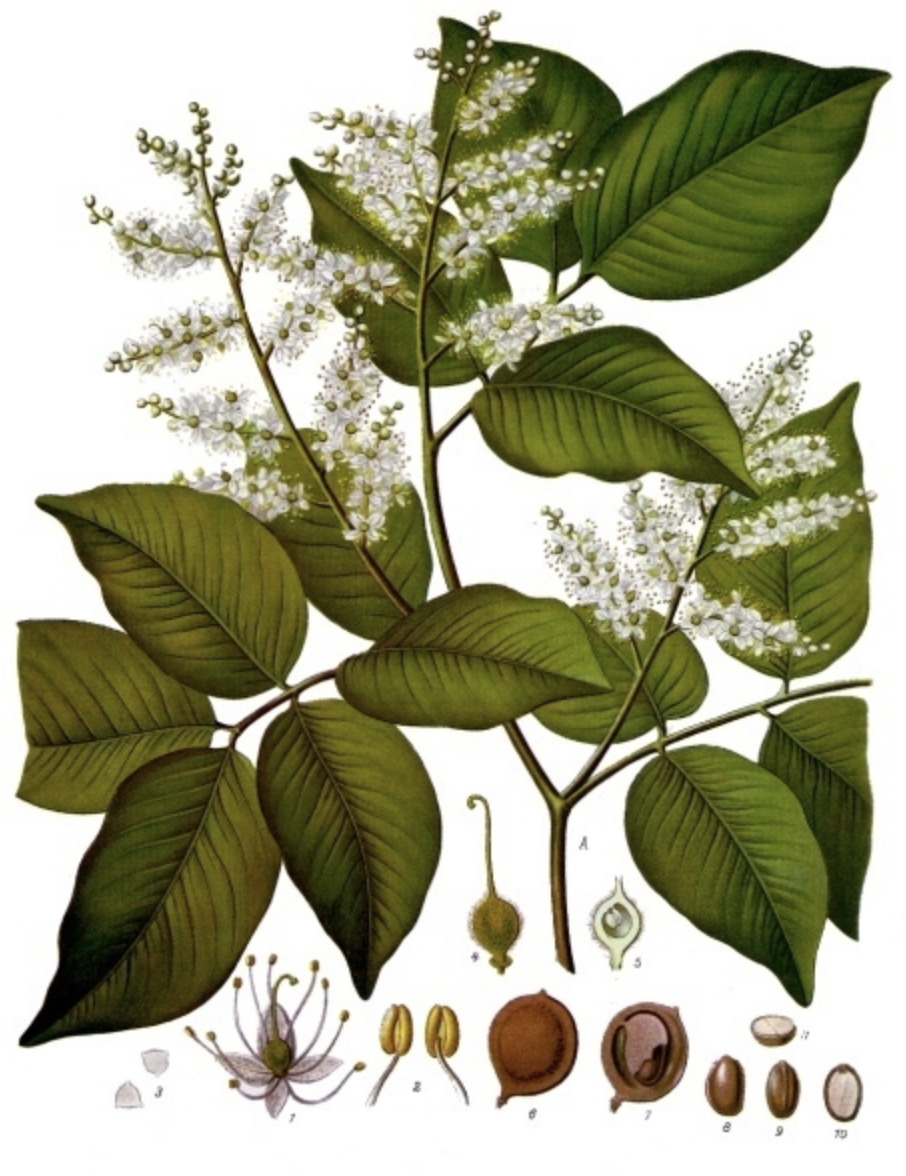
Copaifera officinalis
Copaiba, or Copal (Copaifera officinalis) is a natural resin extracted from the trunks of trees of the Copaifera genus,, members of the Fabaceae family and the Caesalpinioideae subfamily, which grows in tropical regions to 30 meters high. This genus has 70 known species distributed worldwide, and is native in Africa, Central America and South America, with the greatest biodiversity of Copaifera found in Brazil.
The resin is harvested by tapping into the trunk of the tree. This sustainable rainforest resource can be harvested without affecting the health of the tree or the rainforest in which it grows. The extracted liquid resin is double distilled to separate off the precious aromatic oil.
History and Traditions
“Copaiba oleoresin, or Copaiba balsam, has been known for centuries by Amazonian natives for its therapeutic properties. The oil was used over newborn umbilical stumps and the most different sorts of wounds and bruises. The knowledge arises from the observation of wounded animals that rubbed themselves over the Copaiba trunk, in an attempt to get some balsam over the wound.”(kaapiingredients.com)
The Tupi-Guarani people of Brazil are believed to be some of the first to use Copaiba in traditional medicine. In their traditional language “Cupa-yba” means “deposit tree” referring to the oleoresin stored inside the tree. They utilise it to treat wounds, skin conditions, gastrointestinal issues and respiratory ailments. People living in communities close to the forest still use the oil as a remedy for different diseases, infections, as a potent analgesic (pain reliever) and anti-inflammatory. It is traditionally used to treat a wide variety of conditions including urinary tract infections, insect bites, fevers, respiratory aliments and wounds. It is traditionally consumed orally or applied topically to promote healing and reduce inflammation.
Copaiba has a long history of use in spiritual rituals among Indigenous Amazonian tribes, who believe it to have purifying and balancing properties that help cleanse the body and mind of negative energies. It is traditionally applied to anoint the body and to bless sacred spaces before important ceremonies or healing rituals.
Copal is powerful, effective and diverse in it’s medicinal and therapeutic applications. making it a staple in South American healing practices for centuries. As early as the 16th century European explorers learned about Copaiba and brought it back to Europe, where it was incorporated into herbal medicine for treating respiratory conditions and digestive issues.
Phytochemistry
Beta-caryophyllene (BCP): A compound also found in Cannabis but in much higher concentrations in Copaiba. BCP is a sesquiterpene, known for its anti-inflammatory and analgesic properties.
Alpha-humulene: A terpene that is also found in Hops, Cannabis, Sage, and Ginseng. It has anti-inflammatory properties and can be used as an analgesic.
Alpha-pinene: A monoterpene that is recognized for its anti-oxidant, anti-inflammatory and analgesic properties.
Beta-pinene: A monoterpene known for its antibacterial and antimicrobial properties.
Anti-Inflammatory Action
Copaiba essential oil has demonstrated powerful anti-inflammatory action when applied in the treatment of chronic inflammatory conditions. Beta-caryophyllene interacts with the receptors of the Endocannabinoid system, especially the CB2 receptor, modulating the inflammatory response. Copaiba’s high concentration of beta-caryophyllene makes it a powerful anti-inflammatory agent. It has been shown to reduce swelling and inflammation, making it useful for muscle discomfort and joint stiffness.
This anti-inflammatory action holds potential applicability in conditions such as rheumatoid arthritis and injury recovery. Current research is also exploring the neuroprotective effects of Copaiba, as its ability to reduce inflammation may help protect the brain from degenerative diseases like Alzheimer's and Parkinson’s.
Pain Relief
Alongside its anti-inflammatory action, Copaiba has analgesic properties and can help relieve pain and discomfort, especially when applied topically or used in therapeutic massage. It is commonly used for headaches, back pain, and sore muscles. The presence of components with analgesic properties, such as beta-caryophyllene, suggests a mechanism of action involving the modulation of pain pathways. This makes the oil an effective natural remedy for managing muscle, nerve and joint pain, and migraine or tension headaches. Shop Pain Relief balm with Copaiba resin here.
“Copaiba was demonstrated to be twice as effective as diclofenac sodium, an NSAID (non-steroidal anti-inflammatory) which is the most commonly used anti-inflammatory in the world.” (Masson et al, 2013)
Anti-microbial, Anti-septic, Anti-bacterial & Anti-oxidant
Copaiba essential oil exhibits antiseptic and antibacterial properties, and is beneficial for topical prevention and treatment of infection. Components such as alpha-humulene and alpha-copaene have clinically demonstrated activity against pathogenic micro-organisms. Copaiba’s anti-septic and anti-bacterial properties make it an excellent remedy for a variety of skin irritations, rashes and wound healing.
Skin Healing Benefits
Copaiba oil is also believed to improve the appearance of scars and stretch marks, as it helps promote skin regeneration and reduce the appearance of fine lines and wrinkles. Copaiba oil in skincare is anti-inflammatory, antibacterial and anti-oxidant, improve skin tone, reduces acne and minimises scarring.. Its soothing effects can also help calm irritated and inflamed skin, and is known to heal scalp conditions.
Respiratory Health
Traditionally used to treat respiratory complaints, Copaiba oil can be added to a steam inhalation, or diffused to help clear the airways and promote easier breathing, and is beneficial for symptoms of sore throat, bronchitis, respiratory infections and hay fever. Copaiba oil is popularly used for relieving asthma symptoms and has already been shown to be effective in clinical trials as it help open airways and promote deeper breathing, particularly when used in a steam inhalation.
Digestive Health
Copaiba oil is believed to have digestive properties as well. Its soothing effects on the digestive system can help nourishes the cells lining the gut, support digestion and immune function and relieve discomfort, benefiting conditions like ulcers and leaky gut syndrome. In one study, Copaiba oil soft gel supplementation enhanced the gut microbiome by significantly increasing Bifidobacterium, Fusicatenibacter, and Lachnospiraceae family bacterias. These changes suggest that Copaiba supports a gut environment that favours beneficial, protective bacteria—without disturbing the delicate balance of the microbiome.
Energetic Cleansing, Emotional Balance & Stress Relief
Believed to offer both physical healing and spiritual protection, Copaiba has a long history of use in spiritual rituals among indigenous Amazonian tribes who believe it to have purifying properties that help cleanse the body and mind of negative energies, and enhance focus and clarity. It is used to anoint the body and bless sacred spaces before important ceremonies or healing rituals, to clear negative energy. Copaiba resin is seen by Shamans as a powerful protector that can repel anxiety and fear, and is used in counter-magic rituals.
With a rich, woody, slightly sweet and earthy aroma, Copaiba essential oil is grounding, calming and emotionally balancing, reducing tension and stress, enhancing relaxation and promote better sleep. Useful for meditation and energy healing to promote grounding, focus, and emotional balance. It has been sought after in fine perfumery since the 16th century. The oil can be diffused, inhaled directly, or applied topically. Shop Mystic Essential Oil Roll-on with Copaiba resin here.
Cautions & Contraindications
Copaiba is generally considered safe for topical and aromatherapy use. It should be diluted with a carrier oil before being applied to the skin. While ingesting Copaiba oil is common in traditional medicine, it is advisable to consult a healthcare provider before using it internally, especially for those with pre-existing health conditions or those who are pregnant or breastfeeding.
SHOP MYSTIC ESSENTIAL OIL ROLL ON WITH COPAIBA HERE.
SHOP PAIN RELIEF BALM WITH COPAIBA resin HERE.
References
doterra.com/US/en/blog/copaiba-softgels-deep-dive
kaapiingredients.com/articles-essential-oils/copaiba-information/
Masson D. S., Salvador S. L., Polizello A. C. M., Frade M. 2013. “Atividade antimicrobiana do óleo-resina de copaíba (Copaifera langsdorffii) em bactérias de significância clínica em úlceras cutâneas”
https://monq.com/pages/plant-copaiba
https://pmc.ncbi.nlm.nih.gov/articles/PMC10502340/
pdfs.semanticscholar.org/87